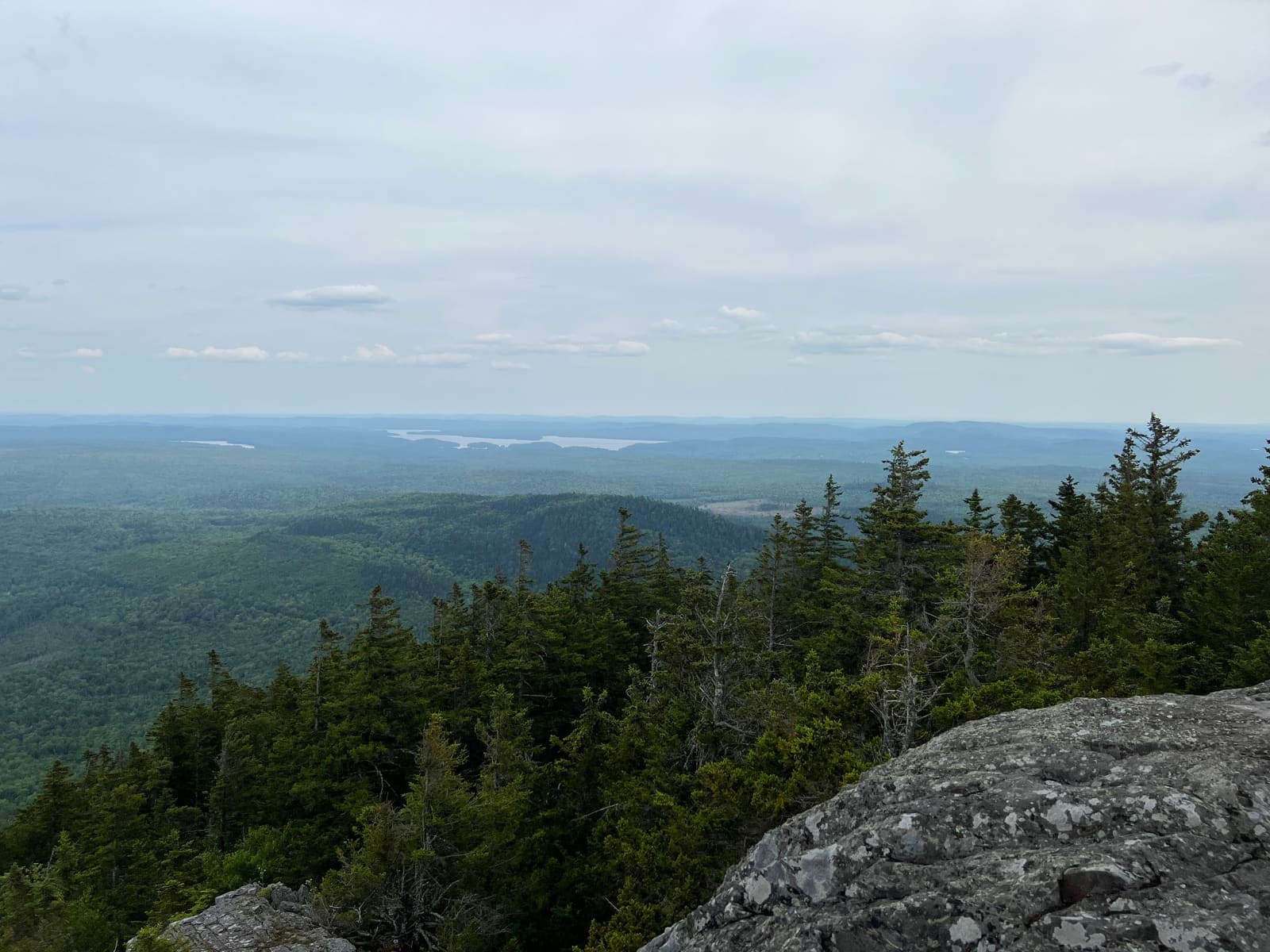
Timber company hunting leases are annual leases on land owned by companies that grow trees for harvest. They are common across the South, where managed pine and mixed forest covers much of the countryside. The tracts are usually big, often several hundred to a few thousand acres. They are priced at a flat rate per acre, leased to clubs rather than individuals, and governed by rules built around one fact: the land is a working forest first and a hunting property second.
That structure suits the company. Whether it suits you is a separate question. Below: how these leases usually work, what they cost, where they tend to fall short, and how leasing private land through us compares.
Looking for ground for this season? Browse private hunting leases now. They're booked by one party, and you pay by card.
Where timber company leases are common
Corporate and investment timberland is concentrated in the southern pine belt. Large holdings are common in Alabama, Georgia, Mississippi, Louisiana, Arkansas, South Carolina, North Carolina, Florida, East Texas, and the southeastern corner of Oklahoma. There is also significant commercial forest in Virginia, Maine, the upper Midwest and the Pacific Northwest, though leasing practices vary by owner and region.
If you live in a heavily timbered county, some of the land around you is probably owned by a timber company, a timberland investment fund or a large forestry business, and much of it is likely already held by clubs that renew year after year.
How these leases typically work
The details vary by company, but most timber company hunting leases share the same shape.
Annual terms, renewal not guaranteed. Leases usually run one year, often on a cycle that starts in late spring or summer. Clubs in good standing commonly renew, but the company decides. The stands, plots and scouting you put in one year can go to someone else the next.
Large tracts. Tracts run to hundreds or thousands of acres. A small timber tract may be larger than most private leases, which is great if you have a group to fill it and a problem if you don't.
Flat per-acre pricing. Many companies set one per-acre rate for an area regardless of tract size or quality. Two very different tracts in the same area can carry the same rate.
Scheduled sales. Some companies offer available tracts only in sales at set times of year, often summer. Miss the window and you're waiting. Tracts that don't lease may come back later, sometimes cheaper, for the shorter time left.
Club or group leases. Because the tracts are large, they usually go to a club with one named leader who signs the lease, collects dues and deals with the company. If you join as a member, your access depends on that person. The lease usually caps membership by acreage, and rosters tend to run as close to that cap as they can, because more members means lower dues each.
Insurance requirements. Commercial landowners commonly ask the lessee group to carry liability coverage or arrange it as part of the lease, and some ask to be named on the policy. Arranging that falls to the club.
What they tend to cost
From our own research into asking prices on large corporate timber tracts in the South, full-season prices have generally run roughly $15 to $20 an acre. For a typical tract of several hundred to about 1,500 acres, that's around $5,000 to $25,000 a year for the whole lease, split among the club's members.
We have also seen tracts that didn't lease at the start of the term offered later in the year for substantially less, sometimes under $10 an acre, reflecting the shorter time left.
These are rough figures from our own research. Prices vary by company, state, county and habitat and change year to year, so treat them as a guide only.
|
Timber company lease |
Private landowner lease |
| Typical tract size |
Several hundred to several thousand acres |
Often under 250 acres |
| Typical price per acre |
Roughly $15 to $20 in what we have seen in the South |
Wide range, roughly $8 to $55 depending on size and region |
| Pricing approach |
Flat rate per acre for an area |
Usually higher per acre on smaller tracts |
| Who leases it |
Clubs and groups |
Individuals, families and small groups |
| Term |
Usually one year |
One season to several years |
| Main land use |
Commercial timber |
Varies: farm, family land, recreation |
Own land and wondering where you fall in that range? Price your land with our free estimate. It takes about a minute. Or call us at (804) 424-5233 (9am to 10pm Eastern, 7 days) for a number for your acreage.
Rules typical of managed forest
The land is managed to grow and harvest timber, so the rules protect the timber, not your hunt. Common rules include:
- Timber operations come first. Harvesting, thinning, planting, herbicide spraying and prescribed burns can happen during the lease, including mid-season. Areas can close while work is underway, sometimes the stand you've hunted all year.
- No cutting trees. Shooting lanes, stand sites and food plots usually need approval, and cutting merchantable timber is generally off-limits.
- Stand rules. Some leases restrict permanent stands, require portables, or ban nails and screws in trees.
- Road and gate rules. Gates stay locked, and some roads close to vehicles or in wet weather.
- Camping restrictions. Campers may be limited to approved spots or banned entirely.
- Rosters. The club submits a member list and may need approval to bring guests.
- Termination for violations of company rules or game laws, which on a club lease can mean one member's mistake costs everyone their ground.
These rulebooks are written by the company and are rarely open to negotiation. Hunters commonly read the full lease and rules document before signing and ask about anything that affects how they plan to hunt.
Habitat on timber land
Managed pine changes over time. A fresh clear-cut can produce a lot of browse and good deer habitat for a few years, but it's hard to see into and hunt. Young, thick plantations are hard to move through. Mature thinned pine with an open understory, streamside management zones along creeks, and hardwood drains are often where the hunting is best.
The catch is that the company's harvest schedule decides what the property looks like next season, not you. Hunters looking at a tract usually ask about stand ages and recent and planned harvests, and where the hardwood bottoms and creeks are.
Watch out for hunting lease scams
Wherever leases are scarce and clubs are full, scammers move in. Hunters looking for timber-type ground on Facebook Marketplace, classifieds and message boards keep running into the same pattern:
- Ads with photos lifted from other listings
- Land the poster doesn't own or control
- Deposits requested by Venmo, Cash App or Zelle
- No meeting in person and no walking the property
- No written agreement
- A price well below anything else in the county
This is not hypothetical. As reported by CBS Miami in August 2026, Rodney Edward Smith, an inmate at Macon State Prison in Georgia, was extradited to Florida on charges brought by the state's Fish and Wildlife Conservation Commission (FWC). He allegedly used smuggled cell phones, aliases and dozens of phone numbers to post fake hunting lease ads for land he didn't own or control, collecting deposits from hunters across 15 Florida counties between July 2025 and April 2026. He was charged in Gilchrist County, including with a first-degree felony of fraudulently offering property for lease, and bond was set at $700,000. He has not been convicted.
An app-to-app payment to a stranger is gone once it's sent. That is the gap we built HuntingLeaseUSA to close.
Timber company, classified ad, or HuntingLeaseUSA
A timber company lease gets a group a lot of acres at a low per-acre rate. In exchange you get a one-year term the company may not renew, a rulebook you can't negotiate, timber work that can shut down your best ground mid-season, and, if you're a club member rather than the leader, access that depends on one person collecting dues.
A private deal from a classified ad can be a real opportunity, or it can be the scam above. From the ad alone you often can't tell which.
Leasing private land through HuntingLeaseUSA works differently:
- We talk to every landowner by phone before a property is listed.
- You book and pay by card through our checkout, not Venmo, Zelle or Cash App to someone you've never met.
- One party holds the lease for the season. No crowded roster and no strangers on your stand.
- Every hunter signs an access agreement and liability waiver carrying the landowner's own rules before access.
- Leases arranged through us are insured.
- Exact location and access details are released in your account after booking.
- Real people answer the phone. Call (804) 424-5233, 9am to 10pm Eastern, 7 days.
Ready to hunt your own ground? Browse available leases, or become a member to book.
Finding a lease near you
Timber leases are often filled by existing clubs that renew every year, so new openings are scarce. Your options:
- Check the leasing pages of timber companies with land in your area, and plan around their sale windows.
- Ask local clubs whether they have openings, and ask how many members share the ground.
- Ask county foresters or extension offices which companies own land nearby.
- Skip the waiting list. Private land is often available in the same counties. Look up your state, such as Alabama, Mississippi, Georgia or South Carolina, or browse every listing.
Can't find what you want? Contact us or call (804) 424-5233 and tell us where you hunt and what you're after.
Own timberland or hunting ground?
If you own land in timber country, you don't need to lease it to a club and live with whoever the club leader signs up. We list private land for one party per season, handle booking and payment, and have every hunter sign your rules before they set foot on it.
How much should you charge? Get your number in a minute with our free estimate, or book a call and we'll walk through it with you. You can also read how leasing your land works.
How many acres, and what's on them? Call (804) 424-5233.
This article is general information, not legal or insurance advice.