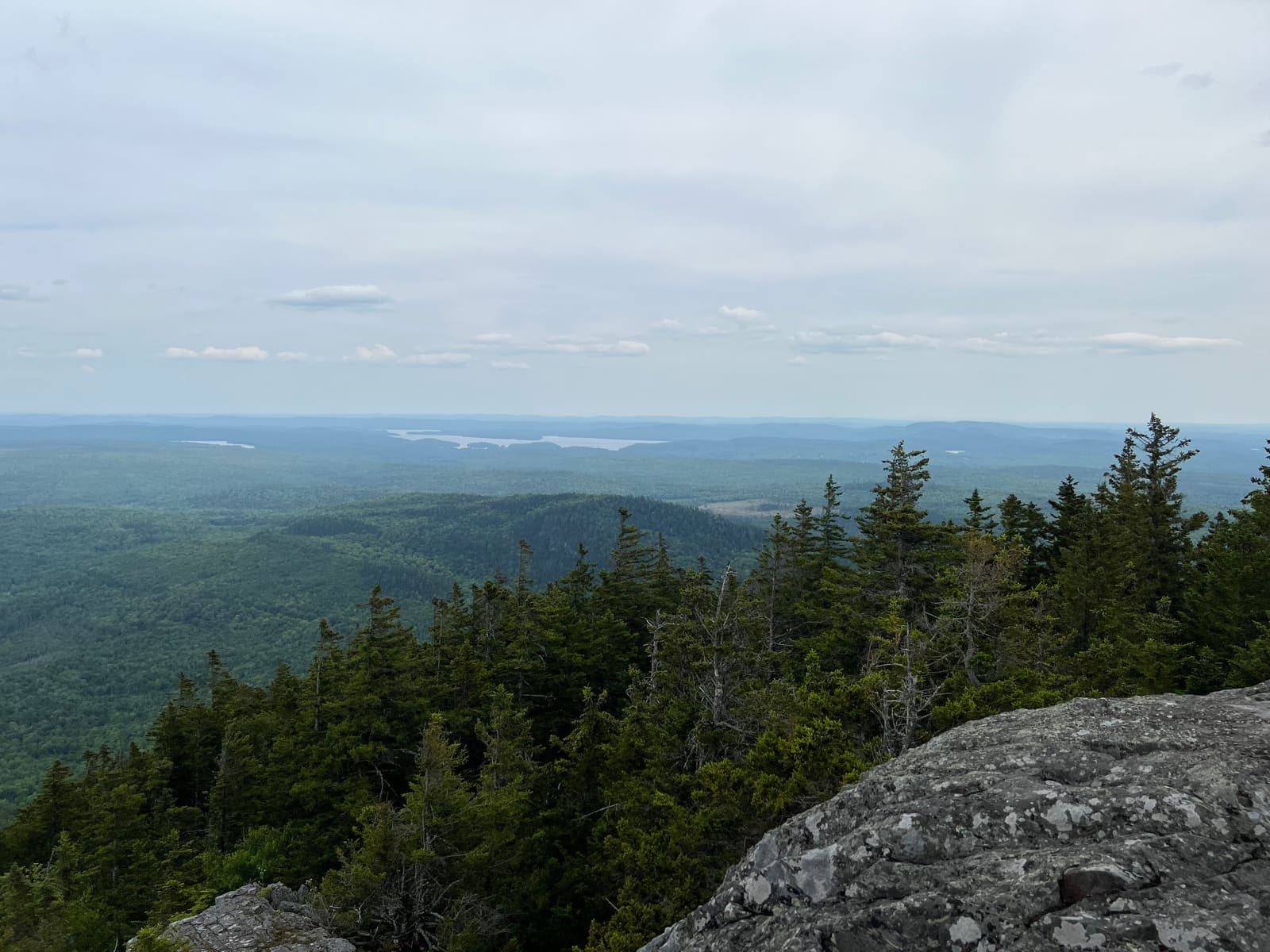
In Mississippi, a timber company hunting lease is usually a one-year lease of the hunting rights on timberland owned by a company or a timberland investor, priced by the acre and held by an individual hunter or by a hunting club that divides the bill among its members. As a rough estimate from our own research into asking prices, large corporate timber tracts in the South have generally run about $15 to $20 an acre for a full season. Corporations own only about 12 percent of the state's forest land, by the state Forestry Commission's count, and lessees in good standing usually get the first chance to renew, so few tracts come open. On company land, the timber work comes first and the hunting second.
For a seasonal lease your own party holds instead of a club share, leave your number on our Mississippi page and we'll let you know when a lease lists there, see every lease listed now, or call (804) 424-5233 and tell us the county you want to hunt.
Our timber company hunting leases directory lists the companies that lease land in this state and how each one offers its tracts. This one takes Mississippi region by region.
How much of Mississippi is in timber
The state Forestry Commission's figures for fiscal year 2024 put Mississippi's forest land at 19.2 million acres, 62 percent of the state. Private citizens own 76.5 percent of it, corporations 12 percent and government 11.5 percent. By type, 45 percent is pine, 40 percent hardwood and 15 percent mixed, and the Commission says forestry consistently ranks among the state's three most valuable agricultural commodities. The U.S. Forest Service's 2022 forest inventory arrives at the same 19.2 million acres, almost all of it timberland.
For a hunter, the ownership split is the number that matters. Most of the state's woods belong to individuals and families rather than companies, so a company lease is one way onto big timber here, not the only one.
Four deer regions, four sets of rules
The state's Department of Wildlife, Fisheries, and Parks (MDWFP) sets its deer rules by four management units, and the one a tract sits in changes the rules its club hunts under. The definitions and limits below come from its 2026-2027 seasons and bag limits page. Statewide, the buck limit is one a day.
| Unit |
Where it is |
Private-land limits |
| Delta |
West of I-55 and north of I-20, plus south of I-20 and west of U.S. 61 |
Three bucks a season, two of them with at least a 12-inch inside spread or a 15-inch main beam |
| Hills |
Everywhere outside the other three units |
Three bucks a season, two of them with at least a 10-inch inside spread or a 13-inch main beam |
| Southeast |
South of U.S. 84 and east of Highway 35 |
Bucks as in the Hills; no more than three antlerless deer a season, one a day |
| North Central |
Six counties in the state's far north |
Four bucks a season with no antler minimum; up to ten antlerless deer |
Elsewhere, the private-land antlerless limit is five a season, and all three bucks of a hunter 15 or younger on private land may be any antlered deer.
The rut keeps a regional clock too. MDWFP's guide to what triggers the rut puts the peak in early to mid December in the northwest, mid December to early January in the central part of the state, and early January to early February in the southeast, and its breeding date map page notes that deer in the far southeast may breed, on average, five weeks later than in some parts of the Delta. A club's best weeks depend on the region its tract is in.
How company leases usually work here
Company tracts here are not all big blocks. On November 16, 2026, three companies listed 27 open units in Mississippi, from 9 to 263 acres, and programs such as Molpus and Weyerhaeuser lease to individuals as well as clubs. Whoever holds the lease, it tends to work like this:
- One signer answers for everyone. Whoever signs, a hunter or a club, answers to the company for everyone they bring. PotlatchDeltic requires a club of more than one member to incorporate as a nonprofit before the license is signed. In a club, the leader collects the dues, and most members never see the lease itself.
- Most run a year at a time. Westervelt's typical term is three years. A lessee in good standing can usually renew, but the company keeps the last word: it can give notice, end a lease when it sells the land or the lessee breaks the contract, or take a tract out of its program. Some companies offer the tracts that do come open only at set times of year.
- A club is one way in. Many hunters get onto company land through a club with a spot to fill, and on the club's terms: its dues, its roster and its stand rules.
- Two sets of rules apply. The company's rules come first and can cover structures, vehicles, locked gates and how stands are hung. The club layers its own on top, such as harvest quotas, guest rules, sign-in boards and work days.
- Forestry work sets the calendar. Cutting, thinning, replanting and prescribed burns are timed for the trees, not for deer season, and a block can close mid-season while crews are in it.
- The state's rules name the club. In primitive weapon seasons after November 30, MDWFP's seasons page says the title owner of private land, the lessee of its hunting rights, a member of a hunting club leasing those rights, or a guest of one of them may use any legal weapon of choice there, with the right license.
What a club share costs
Each company sets its own rates, and they move with the county, the habitat, the tract and the year. The per-acre range above is the club's bill from the company for the season, not a member's dues. Dues are that bill divided by the number of members on the roster, plus whatever the club spends on roads, gates and food plots. As an illustration only: at $15 to $20 an acre, a 1,000-acre tract costs a club $15,000 to $20,000 a season. Split fifteen ways, that is about $1,000 to $1,330 a member; split thirty ways, about $500 to $670.
Rising lease prices reach members in more ways than the dues. When a statewide outdoor magazine asked club presidents and board members in 2018 how their clubs were answering "the rise in lease prices," the answers included raising dues while cutting the number of members, raising guest fees substantially, asking members for contributions above their annual dues, raffles, fines for deer taken under set weights, and cheaper memberships for turkey, raccoon or rabbit hunting only. The same leaders listed ways to take pressure off a crowded lease: caps on trail cameras, limits on ATVs and guests, a sanctuary in the middle of the tract, and teaching members to reach their stands without spooking deer.
None of that shows up in a per-acre rate, and none of it gives a member a say over who else joins. Our guide to hunting club vs. private lease compares the two on cost per person. A private lease usually costs more per acre and covers less ground, but on a seasonal lease the bill is split only among the people in your party.
If your party would rather spend that money on a seasonal lease of its own, see every lease listed now, leave your number on our Mississippi page for word when a lease lists there, or call (804) 424-5233.
The trade-offs of a club share on company land
- A share is not a lease. Fifteen members on a thousand acres hunt the same stands, roads and deer, and pressure runs highest over the rut, on weekends and through the holidays.
- The roster is not yours to pick. The leader decides who gets in and who may bring guests, and every member's habits with the gate code become yours too.
- One person handles the money. Members usually pay their dues straight to the leader, by check or through a payment app, and the whole club relies on that one person to pay the company on time and keep the renewal. Outside the club system, it can be riskier still: "lease" offers posted in classifieds and social-media groups, deposits asked for by app, and nothing in writing.
- Improvements stay with the tract. Food plots, cleared shooting lanes and years of scouting are worth something only on that ground. If the company sells it, ends its leasing program or drops the club, the club loses all of it, and a fresh cutover can wipe it out anyway.
Other big ground: school trust land and WMAs
Mississippi has a second kind of big lease that works nothing like a company program. The Forestry Commission manages about 480,000 acres of 16th Section public school land, and the Secretary of State's office sets out how its hunting is leased in its School Trust Lands manual, which describes the law as it stood in 2017. School trust land classified as forest is not open to public hunting: only the holder of a lease of the hunting and fishing rights may hunt it, and with no lease, the school district posts the land. The local school board leases those rights by competitive bid after notice in the newspaper, and an existing lessee that is current on its rent and taxes and submits a bid has the right to match the highest one. The manual says those leases can run up to 15 years and are not renewed: when one ends, the lessee bids again.
For public hunting instead of a lease, MDWFP runs more than 50 Wildlife Management Areas with over 700,000 acres, its WMA page says. On top of any required license, users carry a WMA User Permit on every WMA that is not on U.S. Forest Service land, and anyone exempt from buying a hunting or fishing license is exempt from buying the permit. A WMA is shared public ground under the agency's rules, not a lease.
A private lease through HuntingLeaseUSA
Not all Mississippi hunting ground belongs to a company or a school district. Private citizens own most of the state's forest, by the Forestry Commission's count, and a private lease puts a party on land like that for a season. Through us, it works like this:
- One party per lease. A seasonal lease is booked by one party, and nobody else can book it for those dates. There is no club roster to share it with.
- The landowner sets the price and the rules. We talk with every landowner by phone before a property is listed.
- Signed before access. Every hunter signs our Access Agreement and Liability Waiver, carrying the landowner's rules, before access. The rules are in the agreement you read at checkout, before you pay.
- You pay by card through our checkout, not by app to someone you have never met.
- The landowner says yes to each booking. Before a booking is confirmed, we go to the landowner, and it goes ahead only if they say yes.
- Exact location and access details appear in My Leases once the landowner confirms. The state and county are on the listing from the start.
See every lease listed now, leave your number on our Mississippi page and we'll let you know when a lease lists there, or call (804) 424-5233 and tell us the county you want to hunt.
Own timber ground in Mississippi?
Leasing to a club is not the only option for pine land, hardwood bottoms or a farm with timber on it in Mississippi. Through us, you set the price, a seasonal lease goes to one party at a time, and every hunter signs your rules before access. We talk with you by phone before anything is listed. Get a free estimate for your acreage, book a call, see how listing with us works, or call (804) 424-5233 and tell us your county and acreage.
This article is general information, not legal advice. Price figures are rough estimates from our own research; real value depends on game, access, habitat and the county.